
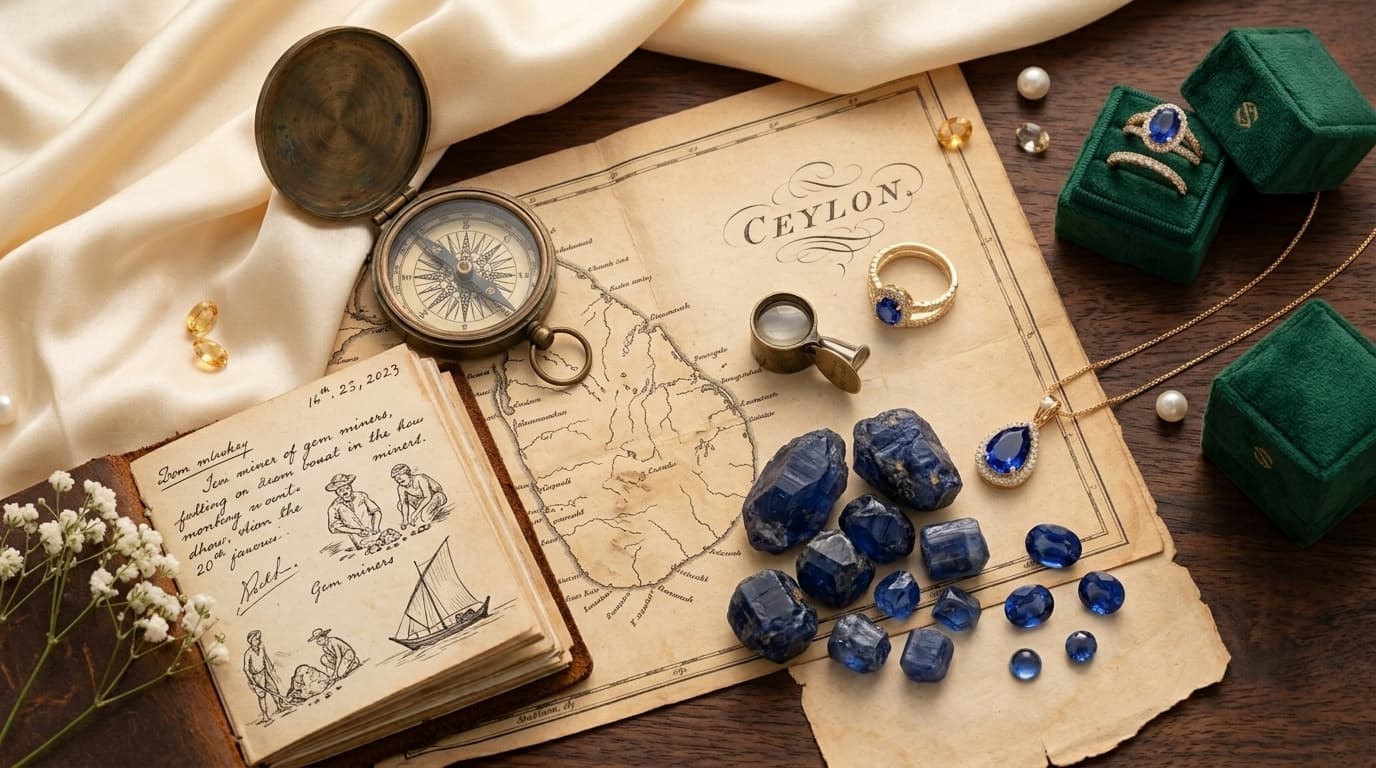
Stories & Heritage
Sri Lankan Gems
Two thousand years of gem heritage — from ancient trade routes to the world's greatest museum collections.
2,500+
Years of gem history
Sri Lanka has supplied the world's finest gems since antiquity
50+
Gem varieties found
More gem varieties per square kilometre than any other nation
90%
Of world's best padparadscha
Sri Lanka produces almost all padparadscha sapphires
GIA A+
Consistent quality grade
Ceylon sapphires routinely receive the highest colour grades
The Reasons
What Makes Ceylon Exceptional
Geological Rarity
The ancient Precambrian rock formations of Sri Lanka's gem bearing gravels — called illam — produce conditions that are nearly impossible to replicate elsewhere, creating sapphires of exceptional saturation and clarity.
The "Ceylon" Colour
Ceylon sapphires are prized for a distinctive velvety, cornflower blue hue — neither too dark nor too pale. This colour is caused by a specific balance of iron and titanium that Sri Lankan deposits uniquely produce.
Unheated Tradition
Sri Lanka has a long tradition of producing naturally coloured, unheated gems. An unheated certificate from GIA or GRS adds significant premium value, and Sri Lankan miners are renowned for preserving this quality.
Royal Provenance
Some of the world's most famous gems are Sri Lankan — including the 423-carat blue sapphire in the British Crown Jewels and the engagement ring sapphire now worn by the Princess of Wales.

Our Source
Ratnapura — City of Gems
We source directly from licensed miners and cutters in Ratnapura, Sri Lanka's gem capital. Every stone is purchased transparently, with a known provenance chain from the mine to your hand.
Our on-the-ground relationships mean we see first quality material before it reaches the international market — and that's the material we pass on to you.
Read about our ethical sourcingBrowse the Collection